Publishers need a cohesive brand identity that cascades across all digital materials, online portals, downloads, websites, libraries, customer accounts, etc.
You can’t succeed without the right technology and the right ecosystem to power this all up.
Great digital publishing is about connecting content, commerce, customer data, access management, and more (!) into one coherent ecosystem.
Here is how publishers can get tech that powers up business strategy.
Fragmentary digitisation is hurting your business
Digital portfolios often develop gradually: an ebook platform comes first, which then gets rolled into an online store, and some time later, e-learning platforms and membership portals are introduced… Now, you have to figure out how to integrate all that noise into a workable system.
This piecemeal approach incurs technical debt and creates inconsistent experiences across products, negatively impacting insight and strategy. Multiple user and customer accounts create frustration and cheapen your brand.
Alongside customer friction, fragmentation also creates more work behind the scenes: editorial, sales and customer service teams may need to update the same information in several places: manual data entry becomes a costly time sink.
As the digital arm of the business grows, it becomes increasingly hard to manage…
Connected ecosystems combat inefficiencies
A modern publishing ecosystem brings digital products and business systems together. Instead of treating elements as separate services, publishers can manage them as parts of a unified customer experience and platform.
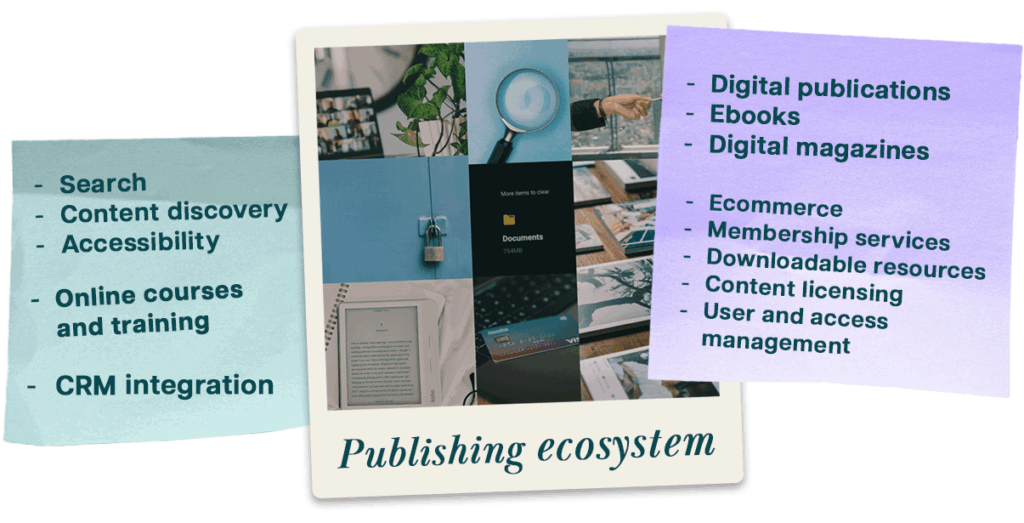
A connected ecosystem means that digital publications and ebooks, online courses and training, digital magazines, downloadable resources, ecommerce, membership services, content licensing, user and access management, CRM integration and search and content discovery are all joined up.
The objective is to ensure that systems exchange information reliably and support a shared customer journey.
When content, customer data, purchases and access rights are connected, publishers can automate more processes and manage a wider range of digital services without creating the same level of operational complexity.
Integration builds the foundation
The value of a publishing platform depends increasingly on how well it connects with the rest of the organisation.
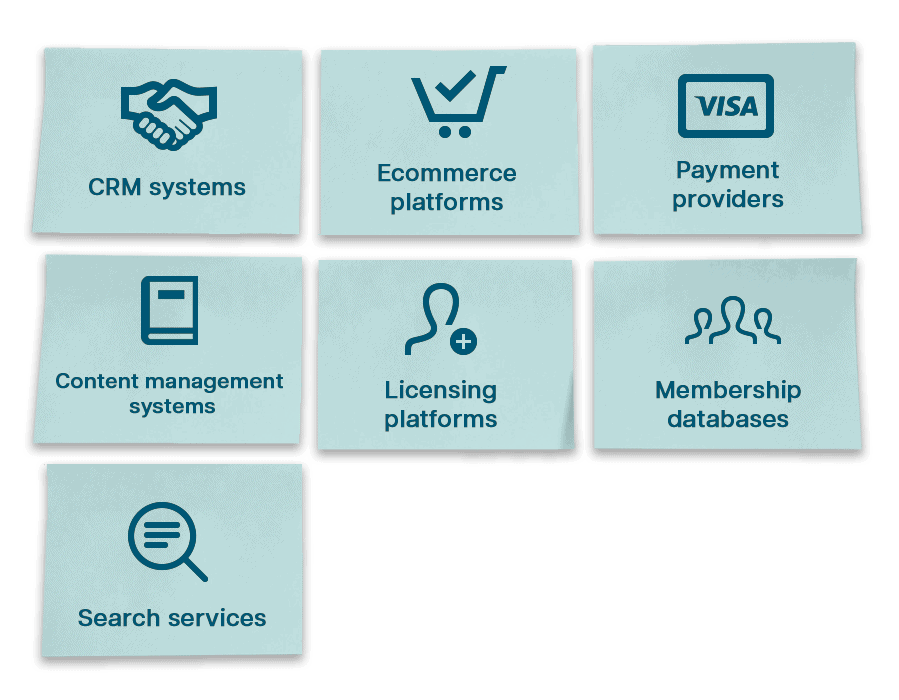
A digital publishing environment may need to integrate with:
-
- CRM systems
-
- Ecommerce platforms
-
- Payment providers
-
- Content management systems
-
- Licensing platforms
-
- Membership databases
-
- Search services
These integrations allow information to move automatically between systems.
For example, a customer purchase can trigger the correct content licence. Membership status can determine which resources are available. Customer records can remain aligned across ecommerce, CRM and publishing services.
Reliable integrations reduce manual administration, improve data quality and give organisations a clearer view of how customers use their digital products.
From content delivery to content experience
A connected ecosystem also changes how publishers think about the user experience.
Customers do not experience an organisation as a collection of platforms: they expect to be able to discover, purchase and access content through a clear and consistent journey.
A modern publishing service should make it easy to:
-
- Find relevant content
-
- Purchase products or subscriptions
-
- Access licensed materials
-
- Use membership benefits
-
- Manage an account
-
- Continue reading or learning across devices
This requires more than a well-designed interface. It requires content, commerce, identity and licensing systems to work together.
When these elements are connected, the platform becomes easier to use and the publisher gains better insight into customer interests, engagement and purchasing behaviour.
This reflects a wider change in the publishing industry: digital transformation is no longer centred on a single publishing application. It depends on the full ecosystem surrounding content.

Specialist publisher products and toolkits
TimeBook allows for full editorial control and data transfer across multiple channels and platforms. Hone your publishing material for both digital and print publishing.
Investing in customer experience
Wraparound data means that because information is shared across systems in a smart way, you can expand your customer experience beyond “passable” to “exceptional”.
-
- Micromoments can often be customer service killers. Pay attention to the little details to truly delight your customer. Save their details. Make personalised recommendations.
-
- Nuance and flexibility can help you meet your customers where they are. Allowing them to purchase across your ecosystem and combine products and services flexibly can help you boost revenue.
Content commerce and monetisation
For many publishers, ecommerce is now part of the publishing experience itself. Customers may purchase an ebook, gain access to a course, activate a subscription or receive content as part of a membership. These transactions need to connect directly with user accounts and access rights.
When ecommerce, CRM and licensing are integrated, publishers can:
-
- Automate access after purchase
-
- Offer member-specific products and pricing
-
- Package content into subscriptions or product families
-
- Manage organisational and individual licences
-
- Create clearer upselling and cross-selling opportunities
This turns the publishing platform into a commercial service rather than simply a content repository.
Discoverable content
Creating valuable digital content is not enough if users cannot find it.
Search, information architecture and SEO should therefore be considered part of the platform from the beginning.
This includes:
-
- Clear product and content categories
-
- Consistent metadata
-
- Search-friendly content structures
-
- Optimised product pages
-
- Intuitive navigation
-
- Effective on-site search
Good discovery supports both users and commercial performance. It helps existing customers find more value in the service while improving the visibility of products to new audiences.
Expansion-ready
Digital publishing will continue to expand into new formats, services and revenue models.
Publishers that continue adding isolated technologies may find that every new product brings complexity. In contrast, organisations with connected ecosystems can introduce new services more quickly because the foundations for identity, commerce, licensing and customer data are already in place.
A connected publishing ecosystem can help organisations:
-
- Launch new digital products faster
-
- Reduce manual administration
-
- Improve customer data and reporting
-
- Deliver consistent user experiences
-
- Increase engagement and retention
-
- Support new commercial models
-
- Scale without multiplying internal processes
The future of digital publishing is not defined by any single format or platform.
It lies in creating an ecosystem where content, customers, commerce and access work together: allowing publishers to grow their digital business without adding unnecessary complexity.